

Customer story · Hotels and hospitality
The Biltmore starts every shift with a ranked list.
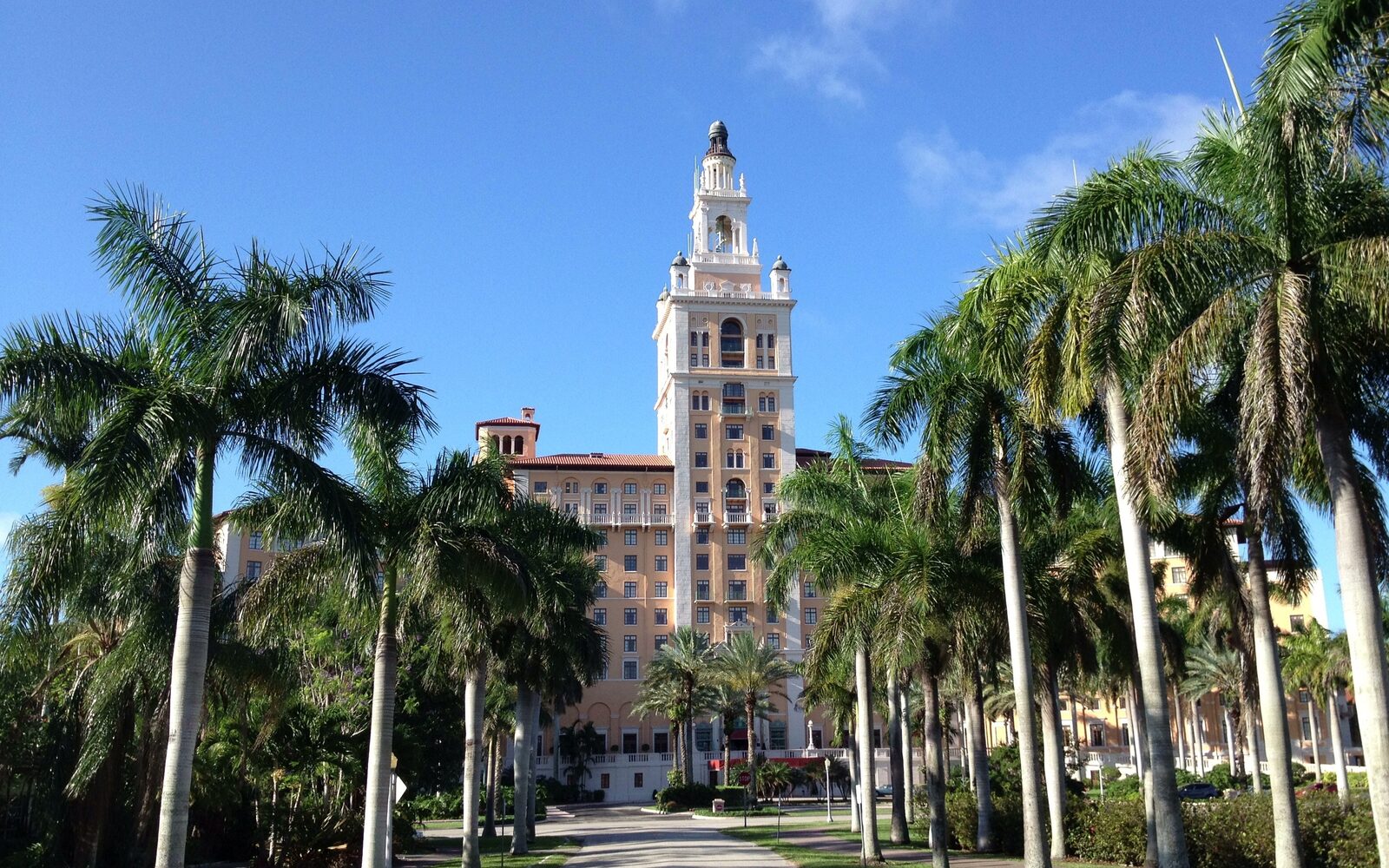
The Biltmore Hotel in Coral Gables has run its plant for a century. Since spring 2026 the engineering team has opened each morning with a Smart Tenants briefing: the conditions that need attention, ranked, with the first check written out, drawn from the building automation system the hotel already had.
At a glance
The Biltmore Hotel
- The property
- A 1926 resort hotel in Coral Gables, Florida, with ballrooms, restaurants, a spa and a conference centre, served by a central chiller plant.
- What is connected
- The Honeywell building automation system already in the building, read over BACnet: five air handlers, the chiller plant and the controllers that run them, nine in all. No new sensors, no new wiring.
- What the team receives
- A morning briefing at six every day, an air handler performance report, a chiller plant report and alarm emails for the engineering team; Insight for ownership.
- Since
- Spring 2026, with the daily briefing in the engineers’ inboxes from the summer.
The situation
A working building automation system, and nobody spare to sit in front of it.
The hotel had controls, alarms and history. What it did not have was someone whose job was to read them before the day started. Problems announced themselves the usual way: a warm ballroom, a complaint from the floor, a unit found off on a walk-round.
Smart Tenants put a small server on the hotel network. It reads the existing controllers over BACnet and makes only outbound connections, so the hotel’s systems stay the hotel’s. Alarm thresholds were set from what the equipment actually does, so healthy points stay quiet and the list stays short.
From the briefing
What the engineering team saw first.
Real conditions from the first weeks, condensed. Each one opens to show what the data showed, what was inferred and what the team was asked to check.
Two reports, one answer.
The morning briefing comes from deterministic checks on each unit. The Air Handler Performance report reads the raw controller points and knows nothing about those checks. In the first weeks both found the same faults independently, which is the strongest evidence the checks are right.
Morning briefing
The Biltmore, condensed from the daily briefing
- 1AHU-12high
Cooling valve open with the fan stopped.
Do firstConfirm the valve command at the controller and close it until the fan runs.
What the data shows
- Fan off.
- Chilled-water valve three-quarters open.
- No airflow through the coil.
What is inferred
Chilled water flowing through a stopped unit: wasted pumping, and a coil that can freeze with no air across it.
What to check
Confirm the valve command at the controller and close the valve until the fan is proven.
- 2AHU-41high
Return-air CO2 above the limit while occupied, the highest in the fleet.
Do nextCheck the outside-air damper and minimum airflow on a unit already at its airflow limit.
What the data shows
- Return CO2 above the limit through a Saturday of occupancy.
- The unit is known to be at its airflow limit.
What is inferred
Ventilation short of the occupancy, not a sensor fault: the reading rises and falls with the people in the room.
What to check
Check the outside-air damper position and the minimum airflow setting. The engineer confirmed the condition matched what he sees on the floor.
- 3AHU-38watch
Return-air temperature sensor reading off the scale.
Do nextInspect the sensor and its wiring at the controller.
What the data shows
- Return-air temperature reporting far below any possible room temperature.
What is inferred
A failed sensor or an open input, not a space condition. The reading is left out of comfort checks until it is repaired.
What to check
Inspect the sensor and its wiring at the controller; the comfort checks resume on their own once it reads sensibly.
Lessons
What the building taught the product.
Running against real equipment found things no simulation would have. Each one is now a rule, pinned by a test.
- A stopped fan is not nothing to report. Every check used to stand down when a unit was off, so a valve left open on a stopped unit went unreported. Now it is a finding, and it reached the hotel’s report as a high-severity item.
- A check says what it can with the sensors it has. Economizer and coil checks once needed sensors the hotel’s air handlers do not have, so they were silent on the very units committing the faults. They now run on what is there and say what cannot be distinguished.
- A reading that cannot be right is named, not used. An off-scale return-air sensor and an implausible chiller return temperature are reported as instrumentation problems and kept out of every calculation that depends on them.
- The report was wrong once, and the check changed. A low static reading after a high-static trip was called a contradiction. It is a consequence: the trip stops the fan, and a stopped fan makes no static. The check now questions a trip only while the fan is running.
Next
What the team asked for next.
- Put a dollar figure on the conditions the briefing already detects.
- Show the change after something is fixed.
- Attribute cost to the plant, the air handlers and the rest.
- Use interval data from the utility rather than monthly bills.
Where it stands
Shipped, and said plainly.
- Cost lines now appear in the briefing, priced from nameplate data for the conditions it detects.
- Resolution is detected and reported when a condition clears.
- Per-equipment cost waits on plant metering that is not reporting yet. Until it does, the briefing says so rather than estimating around it.
What would a morning briefing say about your property?
Tell us about your building systems and we will show you what a morning briefing would say.